


The Sky of the Northwest: Windows to the Universe in León
The Luna region stands out as a Dark Sky Destination. Its low population density and elevation create the perfect conditions for observing the Milky Way with breathtaking clarity.
1. Omaña and Luna Biosphere Reserve
This area is the heart of regional stellar tourism. Its landscape of enclosed valleys acts as a natural shield against light pollution from the plateau.
- Points of Interest: The area around Castillo de Luna offers elevated perspectives.
- Natural Setting: The Omaña and Luna river valleys allow for stargazing surrounded by centennial oak forests.
2. Babia and Luna Natural Park
A place where limestone peaks seem to touch the stars.
- High Mountain Atmosphere: The thin, dry air reduces atmospheric distortion, revealing fainter celestial bodies.
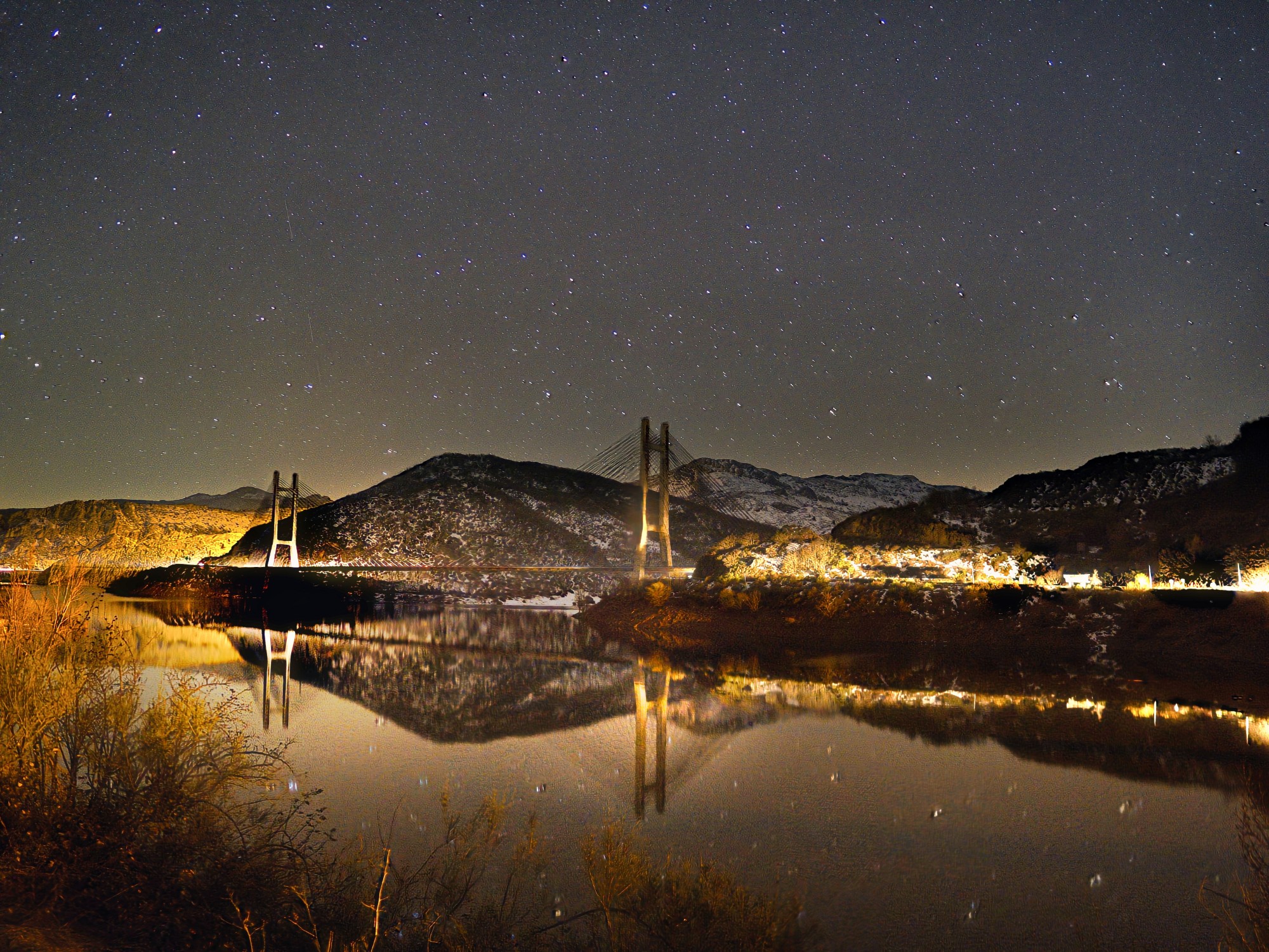
- Lake Babia: A magical enclave where the sky reflects on the water during calm nights.
- Riolago: The Palace of the Quiñones stands out as a center for astronomical outreach in an exceptional architectural setting.
Why is Astrotourism unique here?
- Nocturnal Biodiversity: Dark skies are vital for local species like the capercaillie, linking astronomy with environmental conservation.
- Interpretive Accessibility: The area features stellar viewpoints that allow visitors to learn independently without the need for large infrastructures.
- Summer Climate: While the rest of the country seeks refuge from the heat, summer nights in the Mountains of León offer enviable temperatures and extremely transparent skies.
- Seasonal Highlights: Summer is ideal for viewing the galactic center, while winter offers the Orion constellation with crystal clarity. Standard binoculars are enough to get lost among the region's nebulas.
Casa Rural Salomé: Your Starlight "Base Camp"
Explore the Universe between Luna and Babia
Located in Mora de Luna, our house is the gateway to this doubly protected territory. We offer more than just a restful break within centennial stone walls; we provide the comfort of having the cosmos at your fingertips.
Smart Logistics for the Observer
Unlike isolated accommodations with difficult access, Casa Rural Salomé offers the functionality that every astrophotographer or amateur needs:
- Immediate Access: No complicated forest tracks. Arrive easily by road and use the house as a quick starting point toward the highest observation zones.
- Proximity to "Hotspots": In just a few minutes, you will reach the viewpoints of the Luna Reservoir or the mountain meadows (brañas) of Babia, where darkness is absolute and the horizon opens up 180º
- Safety and Services: Enjoy the tranquility of an inhabited village. After a night session, you will appreciate the easy parking and the comfort of a fully equipped home at street level.
Quick Guide: The Best "Hotspots" from Casa Rural Salomé
|
Observation Point |
Distance from House |
Altitude (approx.) |
Highlight |
|
Luna Reservoir Viewpoint |
5-7 min |
1,100 m |
Open horizons and stellar reflection photography. |
|
Castillo de Luna |
8 min |
1,150 m |
$360^{\circ}$ elevated perspective and historic ruins. |
|
Riolago de Babia Area |
25 min |
1,250 m |
Absolute darkness and high mountain environment. |
|
Puerto de la Magdalena |
20 min |
1,430 m |
Maximum air transparency (ideal for telescopes). |
Mini-Kit for the Guest at Casa Rural Salomé
- Red Light: If using a flashlight, cover it with red cellophane. This prevents losing your eyes' "dark adaptation," which takes 20 minutes to adjust.
- Recommended Apps: Download Stellarium or Star Walk 2 to identify constellations in real-time by pointing your phone at the sky.
- The "Salomé Moment": Upon returning from your session, enjoy the silence of Mora de Luna for one last look at the sky and a chat in our patio.
Are you ready to reconnect with the cosmos? Come to Casa Rural Salomé and experience a place where history meets the eternity of the Leonese firmament. Spaces for the best observation nights are limited. Book your stay now and prepare to sleep under the purest sky of the Cantabrian Mountains.



